
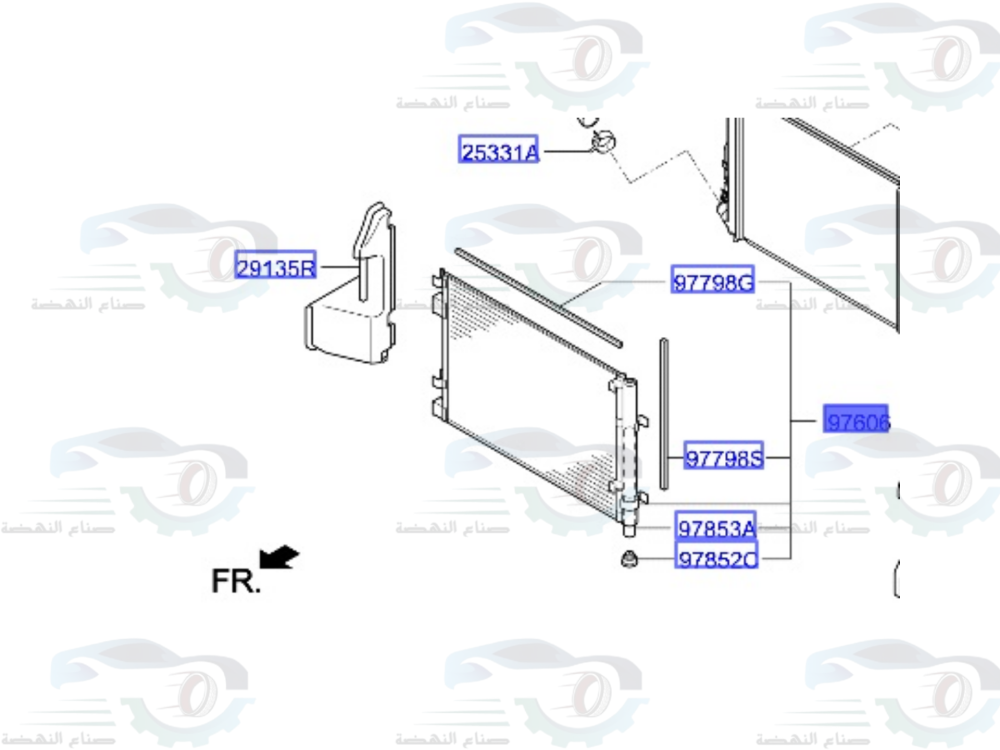

Click on the image to enlarge it

Hyundai

Click here for more Hyundai

976061R000K Accent 2012-2017 AC Radiator Replacement

The air conditioning radiator in a car's air conditioning system, often known as the A/C condenser, is a vital component that dissipates the heat absorbed from inside the car to the outside environment:


Air conditioner radiator specifications:

  • Country of Origin: Korea
  • Product Brand: DOOWON
  • Product Number: 97606-1R000K
  • Compatible models: Hyundai Accent


Location and shape:

  • It is located at the front of the vehicle, just behind the front grille (usually in front of the vehicle's main engine radiator).
  • It looks like an engine radiator, but is specially designed to withstand the high pressures of an air conditioning system.
  • It consists of a network of microtubes (fins) connected to inlet and outlet boxes, and is usually made of aluminum for efficient heat transfer.


Main function:

  • Converting hot refrigerant gas to liquid:
  • The refrigerant gas (Freon) reaches the radiator after being compressed by the compressor and absorbing heat from inside the car via the refrigerator.
  • As it passes through the radiator pipes, its high heat is dissipated by the outside airflow (from the movement of the car or the cooling fan), changing it from a hot gaseous state to a cold liquid.


How it works with other air conditioning components:

  • Closed loop:
  • Hot refrigerant gas (from compressor) → radiator (loses heat, turns into liquid) → expansion valve → evaporator (absorbs heat from cabin) → returns as gas to compressor.
  • The radiator's crucial role: without heat dissipation here, the gas won't turn into a liquid, which thwarts the entire cooling process.


Common causes of failures:

  • Clogged fins: caused by dust, insects, or leaves, which reduces cooling efficiency.
  • Refrigerant leakage: due to corroded pipes or damaged connections.
  • Fin deformation: caused by hitting stones or road debris.
  • Rust or corrosion: especially in humid or salty areas.


Signs of radiator damage:

  • Poor air conditioner cooling even after gas charging.
  • Abnormally high pressure in the air conditioning system.
  • Visible oil or gas leak under the front of the vehicle.
  • Chemical smells when the air conditioner is on.


Preventive maintenance:

  • Clean the fins regularly: with an air hose or soft brush to remove debris.
  • Check for leaks: During routine maintenance.
  • Radiator protection: Avoid minor collisions that may deform it.


For all your Hyundai spare parts needs, click here.

Read more
Sku : 976061R000K

220 SAR VAT Inclusive

260 save 40 SAR

discount 15%
Weight 10 KG

Secure Shopping, Your Data is Always Protected

The air conditioning radiator in a car's air conditioning system, often known as the A/C condenser, is a vital component that dissipates the heat absorbed from inside the car to the outside environment:


Air conditioner radiator specifications:

  • Country of Origin: Korea
  • Product Brand: DOOWON
  • Product Number: 97606-1R000K
  • Compatible models: Hyundai Accent


Location and shape:

  • It is located at the front of the vehicle, just behind the front grille (usually in front of the vehicle's main engine radiator).
  • It looks like an engine radiator, but is specially designed to withstand the high pressures of an air conditioning system.
  • It consists of a network of microtubes (fins) connected to inlet and outlet boxes, and is usually made of aluminum for efficient heat transfer.


Main function:

  • Converting hot refrigerant gas to liquid:
  • The refrigerant gas (Freon) reaches the radiator after being compressed by the compressor and absorbing heat from inside the car via the refrigerator.
  • As it passes through the radiator pipes, its high heat is dissipated by the outside airflow (from the movement of the car or the cooling fan), changing it from a hot gaseous state to a cold liquid.


How it works with other air conditioning components:

  • Closed loop:
  • Hot refrigerant gas (from compressor) → radiator (loses heat, turns into liquid) → expansion valve → evaporator (absorbs heat from cabin) → returns as gas to compressor.
  • The radiator's crucial role: without heat dissipation here, the gas won't turn into a liquid, which thwarts the entire cooling process.


Common causes of failures:

  • Clogged fins: caused by dust, insects, or leaves, which reduces cooling efficiency.
  • Refrigerant leakage: due to corroded pipes or damaged connections.
  • Fin deformation: caused by hitting stones or road debris.
  • Rust or corrosion: especially in humid or salty areas.


Signs of radiator damage:

  • Poor air conditioner cooling even after gas charging.
  • Abnormally high pressure in the air conditioning system.
  • Visible oil or gas leak under the front of the vehicle.
  • Chemical smells when the air conditioner is on.


Preventive maintenance:

  • Clean the fins regularly: with an air hose or soft brush to remove debris.
  • Check for leaks: During routine maintenance.
  • Radiator protection: Avoid minor collisions that may deform it.


For all your Hyundai spare parts needs, click here.

See more View less